Essential Questions Before Any Design Project
Before we pull a single reference, we start with a conversation.
Not a casual kickoff call, but a structured, honest inquiry designed to surface what a brand actually is before we attempt to express it. There’s a version of design work that looks beautiful and means nothing. It photographs well, wins the right awards, and quietly fails to grow the business it was built for. Our pre-project discovery framework exists to prevent that.
These questions are where the real design work begins.
First, we focus on outcomes
The first thing we want to understand is what changes if this project succeeds. Not in terms of outputs but in terms of the business twelve months from now. What becomes possible? What problem quietly disappears? What decision gets easier?
This matters because design commissioned without a clear outcome in mind tends to optimize for approval, not impact. When we know where we’re trying to get, we can make creative decisions that actually serve that destination rather than just look the part.
In order to begin, we need to know what triggered the project in the first place.Every brand engagement is a reaction to something: a competitor making noise, a fundraise that changed the stakes, a founder’s instinct that the current identity no longer fits. Understanding the origin of urgency tells us where the real tension lives. In our experience, tension is almost always where the most interesting creative territory is.
Then we go after identity and brand positioning.
Brand positioning isn’t just “what you do,” or “who your competitors are.” It’s the singular space you occupy in someone’s mind.. It’s the specific belief you hold that your audience shares, the thing you represent that your competitors don’t. Getting there requires a different kind of questioning.
We ask about the best customer not demographically, but behaviourally. What do they believe that most people don’t? Demographics describe audiences. Beliefs define communities. The most enduring brands are built on a shared worldview.
We ask what a brand would never say. What room it would never walk into. Because constraints clarify character, and knowing what a brand isn’t is just as creatively useful than knowing what it is. The negative space of a brand is where its personality tends to live.
And we ask where you think the category has it wrong: visually, tonally, strategically. Differentiation isn’t just being different. It’s being right where others are wrong. If there’s a convention your industry defaults to that you genuinely don’t believe in, that’s a positioning opportunity. We’d rather find it before your competitors do.
“If we ask the right questions first, everything we build after will be smarter, truer, and harder to walk away from.”
We also ask the things nobody wants to ask.
Some of our most useful questions are the ones that make the room go quiet for a second. What would a failed version of this project look like? Has something like it happened before? What’s the thing you’re hoping the new creative helps people move past?
Failure modes are more specific than success modes. That’s what makes them useful. ‘Too cold’, ‘didn’t feel like us’, ‘looked great but didn’t convert’ — those answers tell us more about what to build than any brief. Every brand carries a gap between where it is and where it’s trying to go. We’d rather name it early than design around it quietly.”
Finally, we think about the ecosystem it lives in.
Good design lives inside teams, workflows, touchpoints, channels, most of which weren’t designed at all. So we want to understand every place someone encounters the brand before they hand over money. The gap between what a brand intends and what a customer actually experiences is where trust quietly erodes.
We ask who will actually be living inside this brand week to week, and what their design confidence looks like. A brand system is only as good as the team using it. We build for the real operator.
And we ask the question that separates a project mindset from a platform mindset: if this brand does what it’s supposed to do over the next two years, what becomes possible that isn’t possible today? That answer tells us how much room to leave for the brand to grow into.
This is where The Source® comes in.
Every question we’ve described above isn’t just intake. It’s intelligence.
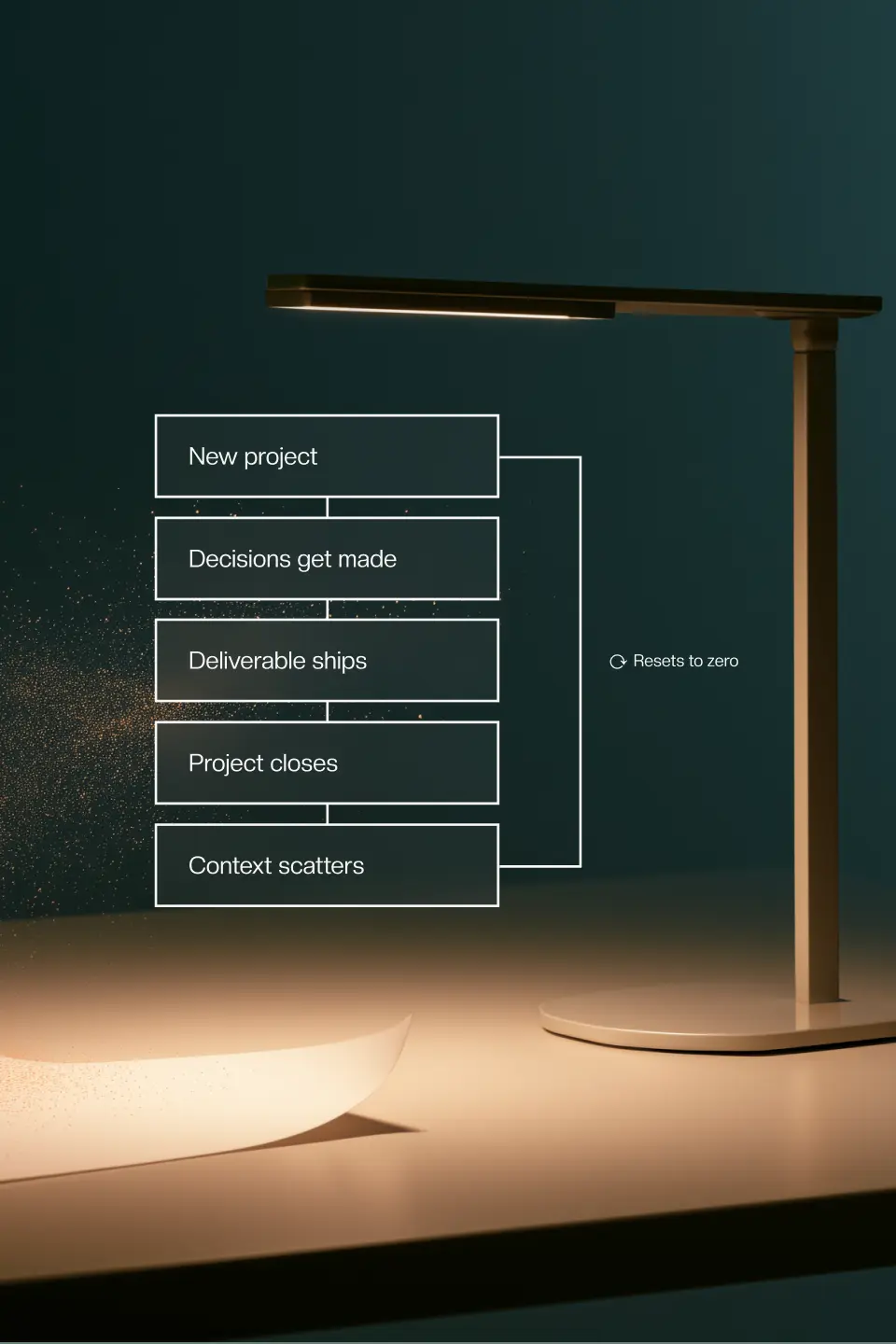
When we begin a project at Radiance, the brief is just the starting point. Every answer you give, every tension you name, every belief you hold about your customers and your category gets absorbed into The Source® as we build. By the time we’re done, it knows your brand the way you do.
That means that by the time we’re making creative decisions, those decisions aren’t guesses. Which typeface carries the right authority, which tone threads the needle between confident and approachable, which visual language signals the right things to the right people and all of it is grounded before we begin.
As the work continues, The Source® keeps learning. Every brief, every asset, every round of feedback makes it more aligned, more precise, and more yours. The creative execution gets faster. The decisions get smarter. The brand gets harder to walk away from because it’s no longer just a set of files, but a system that’s evolved to know you.
That’s the promise of starting with the right questions.
Radiance is a creative agency powered by The Source® — a proprietary Creative OS that combines AI infrastructure with human creative direction. Built for fast-growing brands, CMOs, and growth teams who need senior-level thinking without the agency drag.
The System That Remembers Everything Your Agency Forgot.

(00)
bright insights
(Bright Insights)